
For most card shops, trade-ins are the biggest source of inventory and the easiest place to lose money without noticing. A few habits make the difference between a trade counter that feeds the shop and one that slowly drains it.
Set your buy rates on purpose
Your buy rate is what you pay as a percentage of market value. Most shops run two:
- A cash rate, lower, because the money leaves the building.
- A store credit rate, higher, because the credit comes back as a sale.
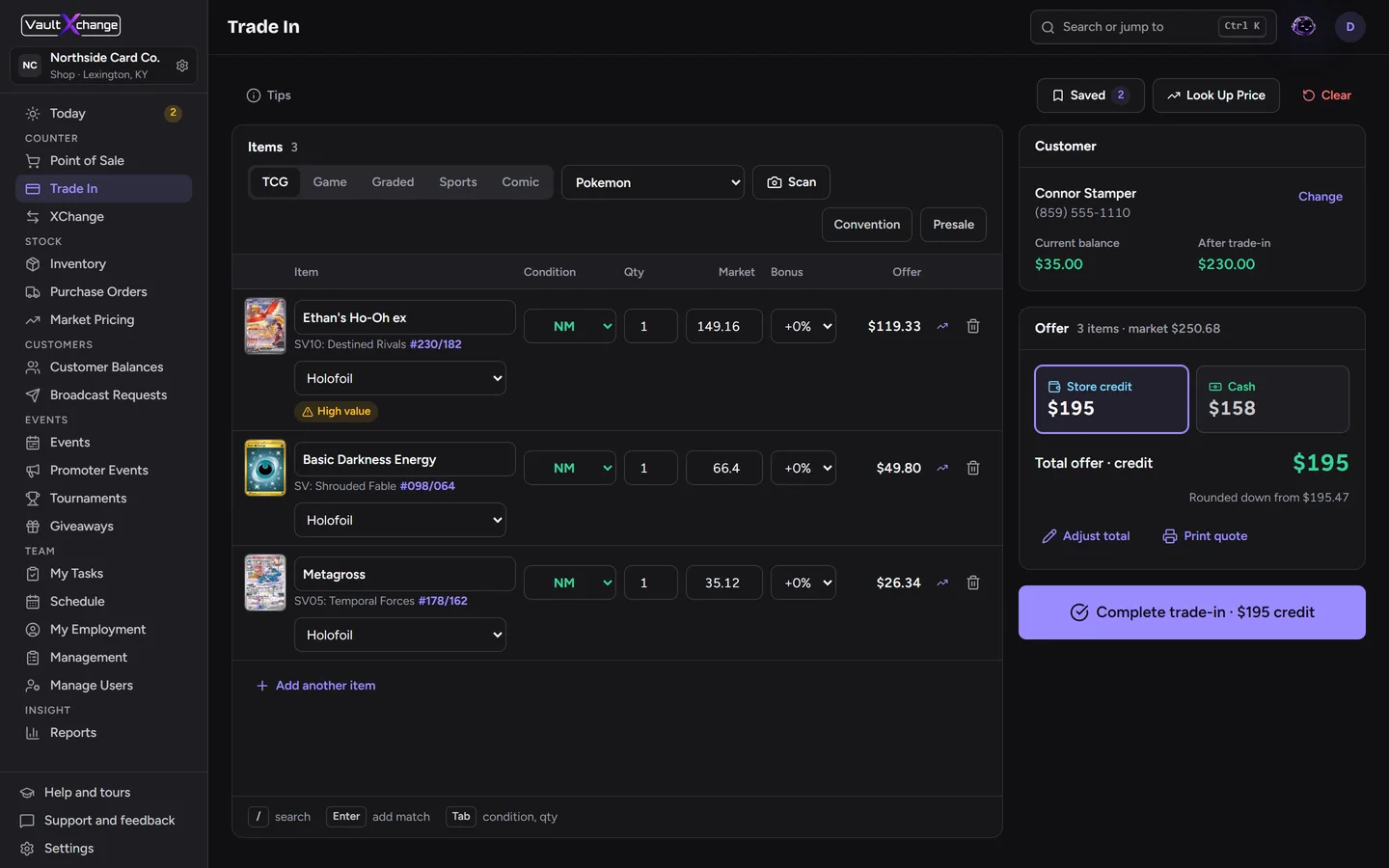
Pick numbers you can explain and stick with them. Consistent rates are faster at the counter and fairer to customers, and they let you see whether the math is working. In VaultXchange you set both rates once, and every trade-in ticket shows the cash and credit offer side by side.
Push credit, but don't force it
Credit is better for the shop: it costs you less and brings the customer back. The best way to get more credit trades is to make credit the obvious choice, not to pressure anyone.
- Show both numbers every time, credit first.
- Keep the credit bonus meaningful. A small gap doesn't change behavior.
- Make credit easy to use. When customers can see their balance on their phone, they remember to spend it.
In VaultXchange, store credit you issue shows up in the customer's free app, shop by shop, so it doesn't get forgotten in a binder.
Price against the live market, every time
Old price lists and memory are where money leaks. Look up every card at the counter against current market data, by printing, condition and finish. VaultXchange trade-in tickets pull live market prices as you add each card, flag high-value cards so someone takes a second look, and let you adjust the bonus or the total before you finish.
Watch the buy spread
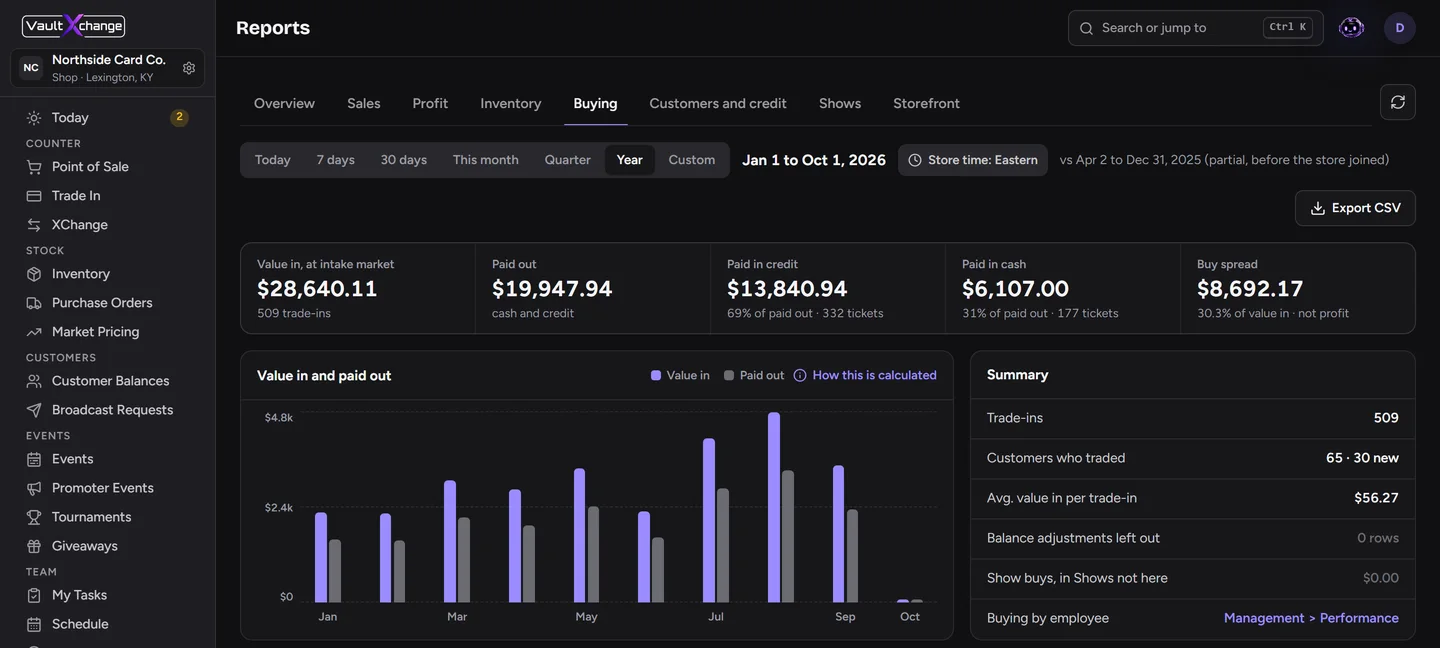
The buy spread is the market value of what came in minus what you paid out. It's not profit. You still have to sell the cards. But it tells you whether your buy rates leave room to make money.
VaultXchange Reports shows trade-ins by period: the market value that came in, what you paid out, how much went out as credit versus cash, and the buy spread. If the spread shrinks while volume grows, your rates or your bonuses need a look.
Move stock before it gets stale
A card you bought at a good price still loses money if it sits. Check how long lots have been in stock, and act on the old ones:
- Reprice cards that have sat more than 60 days.
- Put older stock in a bundle, a discount bin or a tournament prize pool.
- Stop buying more of what isn't moving.
The VaultXchange Today screen calls out lots that have been in stock 60+ days, and inventory shows days in stock and margin on every card.
Make the counter fast
A slow trade counter costs you customers. A few things help:
- Multi-item tickets, so a 40-card stack is one transaction.
- Saved tickets, so you can pause a big trade and come back to it.
- Quotes customers can take home if they want to think about it.
Let customers start from home
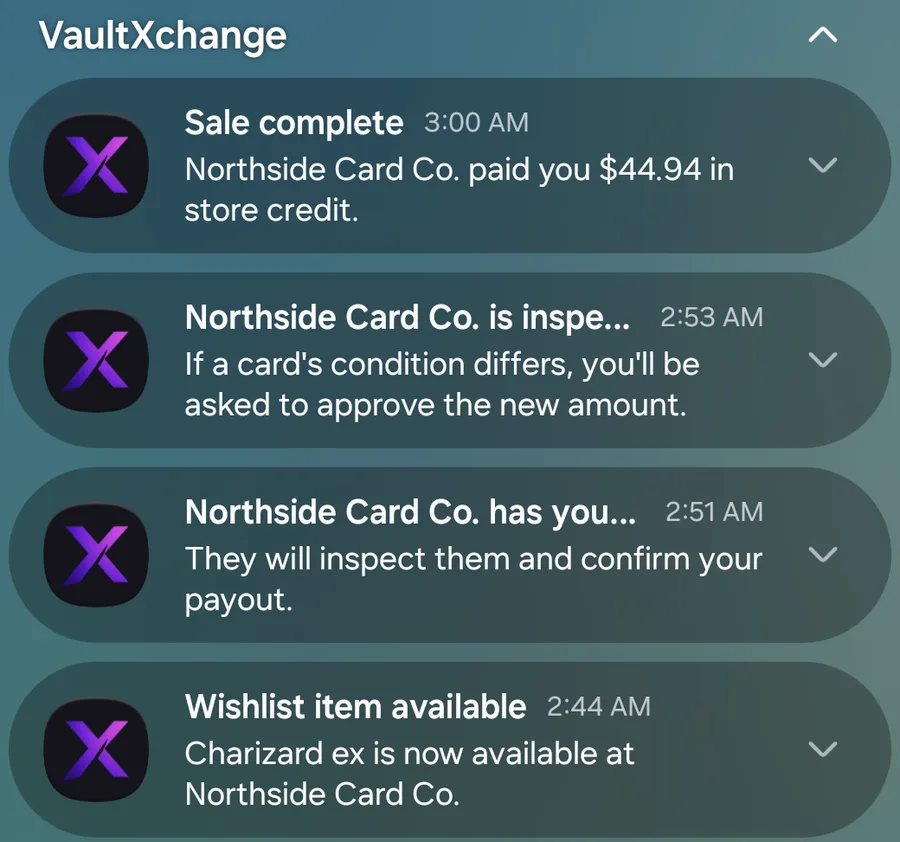
The fastest trade-in is one that's half done before the customer walks in. With Sell Your Cards, customers who already shop with you can pick cards in the app, see your estimate and send you a submission. You inspect the cards when they arrive, and if a condition is different, they approve the new offer on their phone before you pay out.
The short version
- Set a cash rate and a higher credit rate, and keep them consistent.
- Show credit first and make it easy to spend.
- Price every card against the live market.
- Watch your buy spread by period.
- Move anything that has sat for 60+ days.